
English| EUR
Suggested for you
More currencies
Choose a language
Hawaii's waters host one of the world's densest populations of green sea turtles, with reliable sightings at shallow reef sites across the archipelago. This guide covers which islands and dive sites yield consistent encounters, what depths turtles frequent, and how to observe them responsibly under state wildlife protection laws.
Quick answer
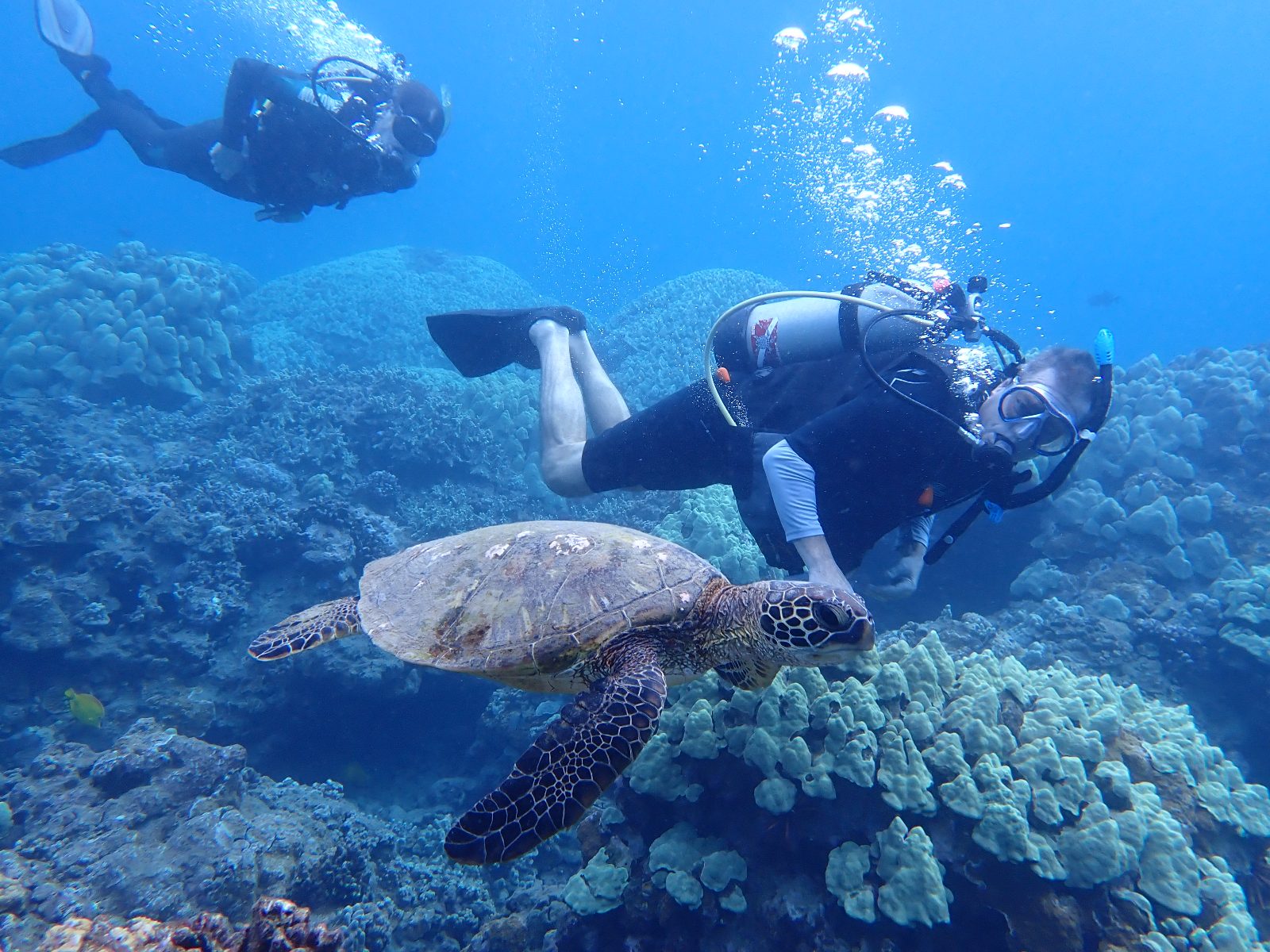
Scuba diving with turtles in Hawaii is accessible year-round at depths of 15 to 60 feet across all major islands, with green sea turtles present at most coral reef sites. The species rests at cleaning stations and feeds on algae-covered rocks during daylight hours, making morning dives between 7:00 and 10:00 optimal for visibility and activity. All sea turtles in Hawaii are protected under federal and state law, requiring divers to maintain a minimum distance of 10 feet.
Green sea turtles return to Hawaiian waters after decades at sea, congregating at specific reef sites where they rest, feed, and allow smaller fish to clean parasites from their shells. These cleaning stations create predictable viewing opportunities for divers at sites across Oahu, Maui, the Big Island, and Kauai. Turtle encounters in Hawaii occur primarily at shallow to intermediate depths where sunlight penetrates enough to support the algae growth turtles graze on. Dive sites along lava rock formations and coral ledges between 20 and 50 feet host the highest concentrations, with individual turtles often returning to the same resting cavities day after day. Sites like Turtle Pinnacle off Oahu's North Shore and Turtle Arches near Maui's south coast draw turtles to specific underwater topography where currents concentrate food sources and shelter. Underwater viewing follows strict protocols under Hawaii's marine wildlife regulations. Divers must not touch, chase, or block the path of any sea turtle, maintaining at least 10 feet of separation at all times. Flash photography is discouraged as it can startle resting animals. Turtles that surface to breathe or glide past divers are exhibiting natural behavior; those that retreat into cavities or swim away rapidly are signaling distress and should be given wider clearance. Most commercial dive operators include turtle ecology briefings as part of pre-dive protocols, covering species identification, behavior cues, and the legal framework protecting honu—the Hawaiian name for green sea turtles. The species was listed as threatened under the Endangered Species Act until 2023, and while populations have rebounded significantly, state protections remain in force. Divers who encounter turtles feeding on reef algae or resting beneath ledges are observing recovery in action, the result of decades of legal protection and habitat restoration across the Hawaiian Islands.
“Green sea turtles return to the same resting cavities day after day, creating predictable viewing opportunities at specific reef sites across the archipelago.”
Access to all public beaches and ocean waters in Hawaii is free of charge. These costs do not include expenses for scuba gear rentals, air fills, or professional boat charter services.
Hawaii law protects all sea turtles as endangered species, requiring divers to maintain a minimum distance and avoid any physical contact. Violations carry federal penalties and harm conservation efforts.
Understanding the biology and behavior of Hawaii's sea turtles provides context for encounters during scuba dives. These species play distinct roles in the marine ecosystem across the islands.
The Chelonia mydas, or honu, is the most common sea turtle encountered in Hawaii and is considered a protected species under state and federal law. Adults can reach weights of up to 300 to 400 pounds.
Known as ea in Hawaiian, the Eretmochelys imbricata is observed much less frequently than the green sea turtle. These turtles are distinguished by their hawk-like beaks and overlapping scutes on their shells.
Despite living entirely in the ocean, honu and hawksbill turtles must surface to breathe air. While they can hold their breath for several hours during resting periods, they typically surface every few minutes while active.
Turtles possess specialized salt glands located near their eyes to excrete excess salt consumed from their marine environment. Divers often observe this as a liquid secretion, which can be mistaken for the turtle crying.
Green sea turtles primarily consume algae and seagrass as adults, whereas hawksbill turtles utilize their pointed beaks to feed on sponges found in coral reefs. This dietary difference helps maintain the health of Hawaii's reef systems.
Sea turtles are long-lived marine animals that reach sexual maturity between 25 and 35 years of age. They often return to the same beaches where they hatched to lay their own eggs.
Turtle dives require certification, reef-safe products, and awareness of protected-species protocols.
Everything you need to know about scuba diving with turtles in hawaii
Yes, observing sea turtles is legal, but federal and state laws protect these marine animals from harassment. When scuba diving with turtles in Hawaii, maintain a respectful distance and never touch or chase them.
When engaged in underwater turtle observation, divers must follow strict non-interaction protocols. Divers must avoid blocking their path or surfacing, as these reptiles are federally protected species under the Endangered Species Act.
Bring your certification card, logbook, and personal dive gear if you prefer using your own equipment. When preparing for scuba diving with turtles in Hawaii, pack reef-safe sunscreen and a towel for use after your time in the water.
Scuba Diving in Hawaii Cost & Pricing
Read more GuideBest Time for Scuba Diving in Hawaii
Read more GuideWhere is the Best Scuba Diving in Hawaii
Read more Tickets & toursScuba Diving Tours in Hawaii
Read more GuideScuba Diving in Hawaii for Beginners
Read more Tickets & toursHawaii Scuba Diving Packages
Read more