
English| EUR
Suggested for you
More currencies
Choose a language
Hawaii offers some of the most accessible tropical diving in the Pacific, with warm water, high visibility, and protected bays designed for novice exploration. This guide walks you through certification requirements, ideal dive sites across the islands, and the morning conditions that give first-timers the safest start beneath the surface.
Quick answer
Beach access across Hawaii is free, but guided beginner dive excursions require private booking through certified operators. Morning conditions between 07:00 and 10:00 typically offer the calmest waters and best visibility for first-time divers. Most operators provide discover scuba experiences that allow you to dive without prior certification, while full open-water courses span three to four days and grant you independent diving privileges worldwide.
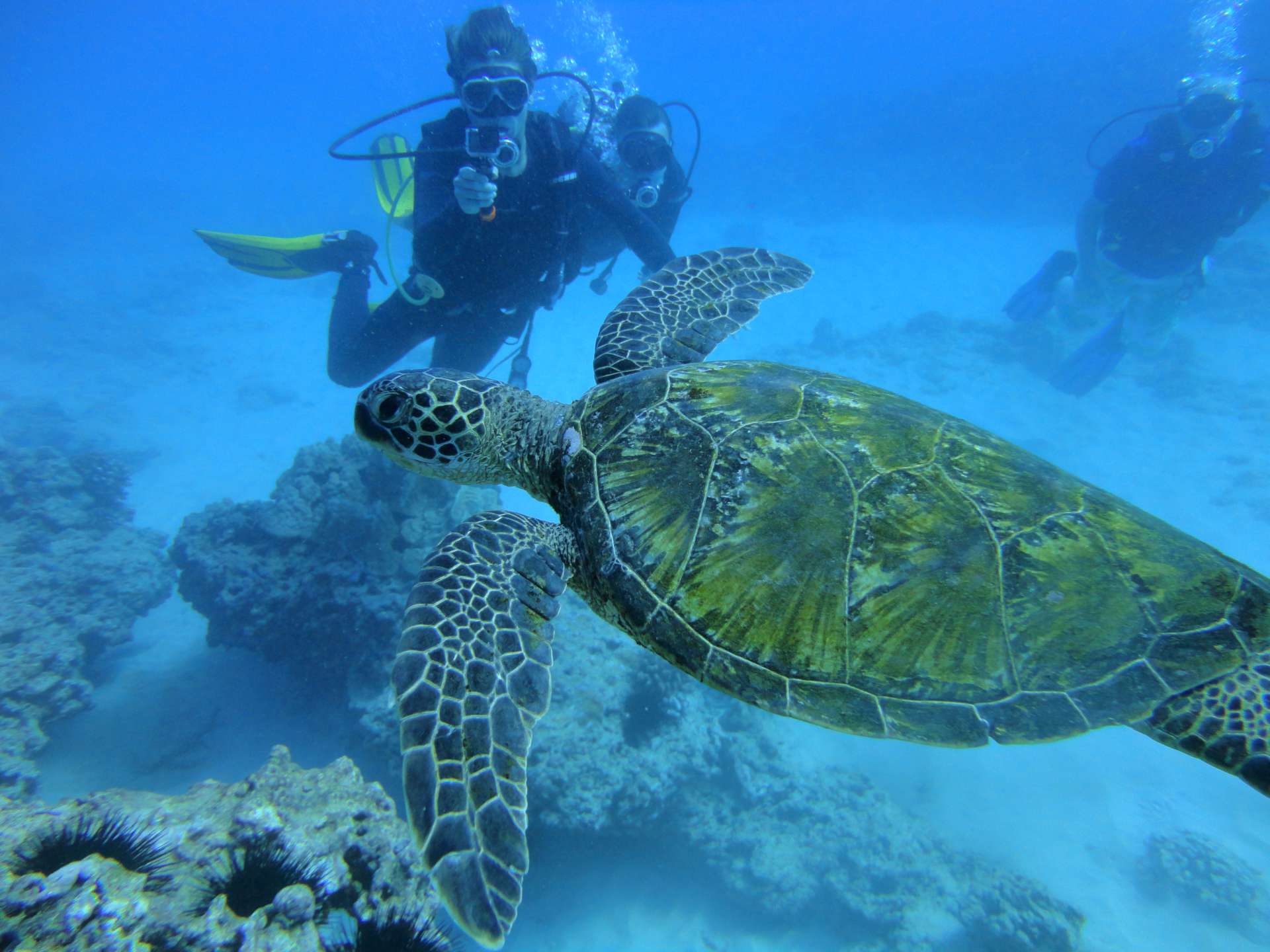
Hawaii's underwater terrain varies more dramatically than its beaches suggest—volcanic ridges, lava tubes, coral gardens, and sandy channels create dozens of distinct dive environments within a few miles of shore. For beginners, this diversity means you can choose conditions that match your comfort level rather than adapting to a single challenging site. Scuba diving in Hawaii for beginners centers on a handful of consistently calm bays where operators run daily introductory programs. Hanauma Bay on Oahu, Molokini Crater off Maui, and Kealakekua Bay on the Big Island are the most frequently recommended for first descents. Each site sits in the lee of prevailing trade winds, and the surrounding reefs start shallow—often ten to fifteen feet—before sloping gradually to deeper water. Visibility routinely exceeds eighty feet during morning hours, and the absence of strong currents lets you focus on buoyancy and breathing rather than fighting the ocean. Certification is not required for a first dive, but it determines what you can do independently afterward. Discover scuba programs place you under direct supervision of an instructor for a single shallow dive, usually to a maximum depth of forty feet. The session includes a brief pool or confined-water orientation, then a guided reef tour lasting thirty to forty-five minutes. Open-water certification involves classroom theory, pool skills, and four open-water training dives. Once certified, you can dive anywhere in the world without an instructor present, rent equipment independently, and join boat charters that venture to advanced sites. Water temperature in Hawaiian waters holds steady between 75 and 80 degrees Fahrenheit year-round, warm enough that most beginners dive comfortably in a three-millimeter wetsuit. Marine life varies by island and season, but green sea turtles, reef fish, and occasional spinner dolphins appear across all the main dive zones. Winter months bring humpback whales to the channels between islands, and while you cannot dive directly with them, surface intervals often include sightings. The reef itself—built by centuries of coral growth over black lava—creates the architecture that defines each site, from the vertical walls at Lanai's Cathedrals to the sandy amphitheater at Turtle Canyon.
“Visibility routinely exceeds eighty feet during morning hours, and the absence of strong currents lets you focus on buoyancy and breathing rather than fighting the ocean.”
The best arrival window for beginners is 07:00–10:00, as morning conditions typically offer the calmest waters and best visibility. Planning your dives around these hours minimizes the impact of afternoon trade winds and swells.
Water temps 78-80°F, calm seas
Ideal for beginners due to minimal wave activity and clear water.
Water temps 74-76°F, high swells
Northern shores experience large swells, making many beginner sites inaccessible during these months.
Water temps 76-78°F, stable conditions
These months offer a balance of comfortable water temperatures and consistent, calm sea states.
—
Visiting on weekdays provides more personal space on dive boats and quieter conditions at popular beginner entry points.
Verdict: For the most stable conditions and manageable crowds, aim for weekday mornings during the shoulder months of April or October.
Starting scuba diving in Hawaii typically involves completing an introductory resort course followed by booking a professional guided dive. The entire process from initial training to your first ocean dive takes one to two days.
These introductory programs last 2-4 hours and teach basic skills in a pool or shallow water. Many visitors skip the classroom certification and choose these streamlined options designed for vacation timelines.
Shore dives launch directly from beaches and offer easier logistics, while boat excursions reach deeper sites but require coordination with departure schedules. First-timers often find shore entries less overwhelming.
Certified instructors maintain small group ratios and provide all equipment as part of the excursion. Confirm your operator includes wetsuit, buoyancy control device, regulator, and tank in the booking.
Ocean conditions between 07:00-10:00 typically offer calmer waters and clearer visibility. Afternoon wind and swell can reduce comfort and safety margins for beginners.
Certain conditions like asthma, heart issues, or recent surgeries require physician clearance before diving. Withholding information creates serious safety risks underwater.
Squeeze sensations in your ears signal pressure imbalance—ascend slightly and equalize more frequently rather than pushing through discomfort. This is the most common mistake that ends beginner dives early.
Public beach access in Hawaii is free, but all scuba diving excursions for beginners require booking professional guide services. These professional fees cover essential boat transport, certified instruction, and equipment rental.
Verdict: While beach access is free, beginners typically pay for professional dive excursions, with prices varying based on the specific operator and location.
First-time divers should arrange certification or introductory sessions with licensed operators, confirm medical clearance, and gather essential documentation before heading to the water.
Everything you need to know about scuba diving in hawaii for beginners
Yes, scuba diving in Hawaii for beginners is safe when conducted through licensed operators who provide thorough instruction and constant supervision. Many visitors start with a discover scuba experience that emphasizes comfort and safety in shallow, clear coastal waters. Proper training ensures you are familiar with buoyancy control and breathing techniques before entering deeper areas. Always ensure your instructor is certified by a reputable agency to maintain safety standards throughout your excursion.
No, you do not need a prior certification to participate in a discovery dive designed for those interested in scuba diving in Hawaii for beginners. These introductory programs provide basic skills training and equipment familiarization under the direct guidance of a professional. If you decide to pursue the sport further, you can then enroll in full certification courses. Most operators specialize in these non-certified trial sessions to introduce newcomers to the underwater environment.
When preparing for scuba diving in Hawaii for beginners, bring a swimsuit, towel, reef-safe sunscreen, and a change of clothes. Most professional dive shops provide all necessary technical gear like tanks, regulators, and wetsuits as part of your booked excursion. It is also helpful to bring a reusable water bottle to stay hydrated before and after your dive. Confirm with your specific provider if they recommend any additional personal items before you arrive.
Scuba Diving in Hawaii Cost & Pricing
Read more GuideBest Time for Scuba Diving in Hawaii
Read more GuideWhere is the Best Scuba Diving in Hawaii
Read more GuideScuba Diving with Turtles in Hawaii
Read more Tickets & toursScuba Diving Tours in Hawaii
Read more Tickets & toursHawaii Scuba Diving Packages
Read more